New Thoughts on Place, Community and Culture
October 26, 2026 Reading time: 5 minutes
Since I was at the Edinburgh Book Festival, I have been reading three very different books dealing with the intersections of place, migration, difference and connection. My current preoccupations fall somewhere in the overlap between these books, which I can't recommend highly enough.
The Book of Mysteries: Wild Time and the Ritual Year Rebecca Tamás, Pushkin Press
I have looked out for anything by Rebecca Tamás since an article she wrote for the White Review about magical language and feminism, and The Book of Mysteries was on my TBR list before it even hit the printers. I am not disappointed. Based on the wheel of the year, it deals with rituals of connection in folk culture, and though it centres mostly (not exclusively) on English events, she draws on a very wide base of scholarship, and most importantly, lets indigenous cultures speak in their own voices. It operates on a personal level, philosophical and psychological, arguing convincingly that the remedy for our current malaise is connection, both to the earth and to our communities, and it is enacted by rituals – personal, or spiritual rituals, of meaning to individuals, but also communal and celebratory rituals like the Beltane festival in Edinburgh, or the solstice celebrations at Stonehenge. The research is through, and wide-ranging, as I expected. What came as a surprise, however, was the beauty and clarity of the writing, and the careful construction of the book. It is poetic even more than academic.
Finding Albion: Myth, Folklore and the Quest for a Hidden Britain Zakia Sewell Hodder Press
Zakia Sewell’s book is a more relaxed read, more journalistic, more concerned with the political and social. Of Celtic and Caribbean heritage herself, her take on a connection to a country currently dealing with its identity primarily by means of racism and insularity is complicated. Her writing is lively, both individual and urgent, but neither polemical nor angry, and the book is a delightful read. Inspired by an early enthusiasm for the music of Pentangle (which I shared, though in a previous generation), she discovers a vibrant and inclusive British culture, that has always been open to renewal from outside, that is as willing to embrace the strange as it is to cherish the familiar, and that allows new celebrations and communities to emerge from the melding of the new with the traditional. She doesn't flinch from the latent (and occasionally overt) racism in some folk traditions, but she successfully establishes her opinion that the folk scene has much more to offer than nativist nostalgia.
The New Eden: Wildlife in the City and Discovering our Shared Home JC Niala Gaia
A big strand of Comrades of Dark Night was about sharing space with other living creatures (whether other generations, other nationalities or other species), so the questions raised by this book matter a lot to me. However, JC Niala is head of Research at the History of Science Museum in Oxford, and as I am not a scientist, I was at first a little intimidated, and wary of whether I would find myself on the same wavelength. I need not have been. A bubbly, warm personality emerges, as full of wit and humour as well-ordered and dexterously handled learning. She writes about the kinds of creatures we share our living spaces with, yes, including rats and pigeons and snakes, and, at one point, even lions. She draws from the experience of Kenya particularly, but also Japan, New York and London, and this is a useful reminder of how provincial our ecological perspective has become in this country. In particular, the discussion of how Masai hunters have adapted their attitudes to hunting lions has made me think a bit more about our attitudes towards deerstalking in Scotland. She reminds us that we, and the animals who live closest to us, have become adept at finding ways to share spaces and lifestyles, and that this is to our advantage.
In other reading, have also been inspired by recent publications by Jane Clarke, Carolyn Forché and Alice Oswald, but poetry will have to wait until next time, when I want to think about how we approach poetry in a time of fire.
A Water Question
October 5, 2026 Reading time: 7 minutes
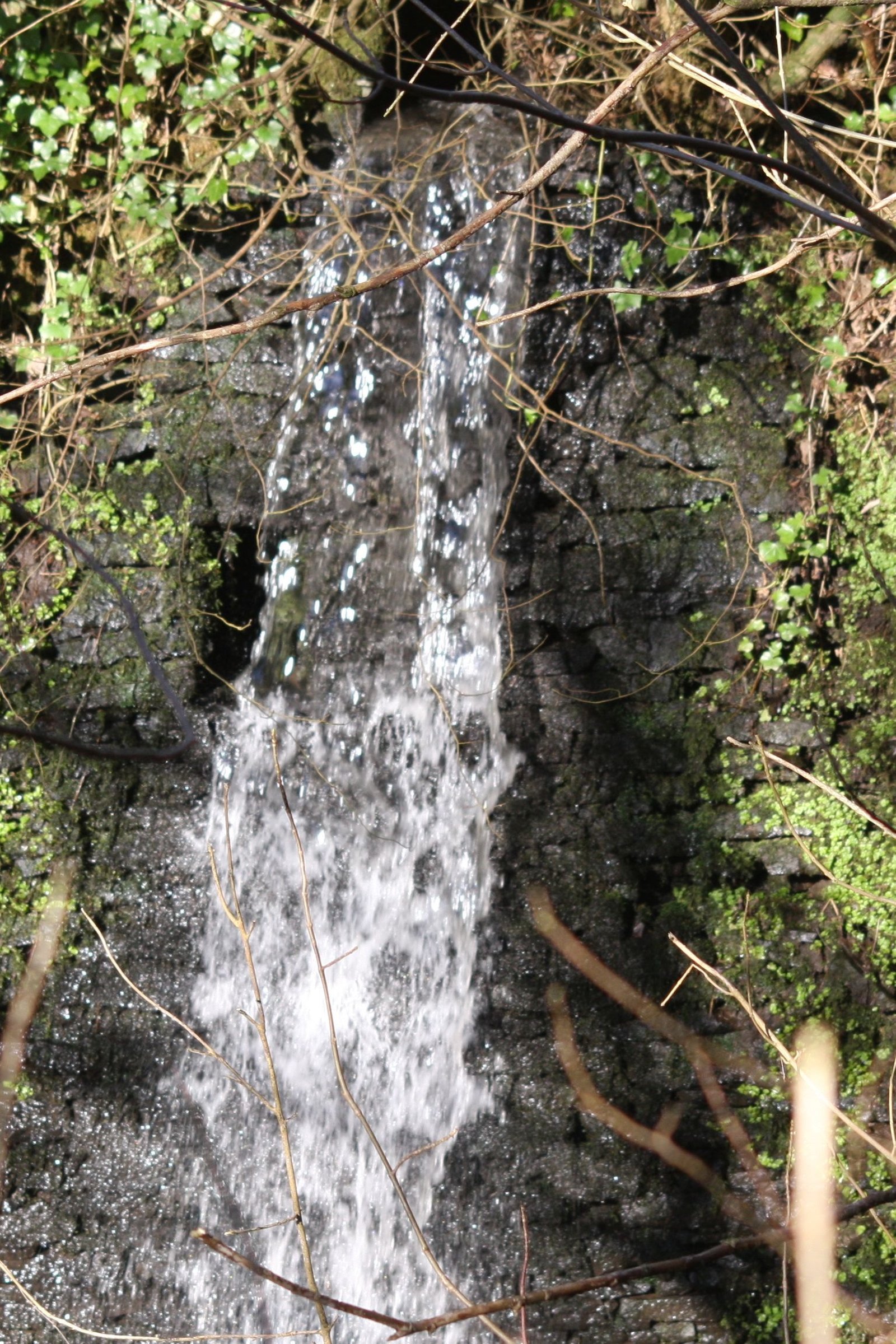
This is the title poem of my second collection which came out in 2015, a lovesong to rain which seemed to characterise our whole lives at the time.
The Territory of Rain
This is the territory of rain.
It is king here, more than cold or wind,
and all living is by negotiation
with flows and falls of water.
Earth and sky are heavy with it.
Peat grips it like a miser's fist.
River runs muddy as rain sloughs
the silt from bank and hillside.
It winks between grass stems,
silvers pot-holes in the tarmac,
attacks roofs with soft persistent fingers,
slips like sorrow between slate and timber.
And yet, the heart lifts at the sound
of falling water. It ripples
and sings like a lullaby,
even when the river is at the doorstep,
even when the soaked ground
gasps for breath and roots begin to rot.
It is king here and we serve it
with macs and umbrellas,
catch its least drips in water-butts,
watch it punch small holes in ponds
delighted, even as we wish it elsewhere.
Not so much these days. In the Dune books, among the Fremen, an existential problem is referred to as a 'water matter'. Water on the harsh desert planet of Arrakis is so scarce that the issue colours every aspect of life there, even the language. This summer I felt we might begin to understand. The drought in England (and in three regions of Scotland), is causing most ordinary people serious concerns. Harvests are poor, feed for animals over the winter is going to be short, water levels are lower than average even in wet places, and there are serious concerns about the quality of water in our rivers. What is more, there is a super-niño forecast which may mean storms and flooding, as the baked ground will not soak up the rain as easily we might expect. Already people are being warned that it will take months of above average rainfall to restore the water-tables to their proper level. Gardening magazines are full of recommendations for planting schemes to cope with hotter, drier summers, and this does not take into account the extra demands that all the projected data centres will make. Everything is now a water question.
I have been thinking about water more lately, as the Season of Creation, which runs from the 1st September to the 4th October was on the theme of 'living water'. It hasn't been all about the polluted chalk streams in England or the damaged desalination plants in Gaza, either. I have been thinking about the bogs which have been rewetted and stopped wildfires in their tracks, about beavers whose dam building activities have restructured the flow of rivers to prevent flooding, of the burn we saw in Argyll last month whose ripples and clucks and gurgles formed the background to our holiday, juvenile guillemots coming up the Clyde to shelter from the stormy weather, grey against the silver, and this spring somewhere above New Lanark, straight from the rock.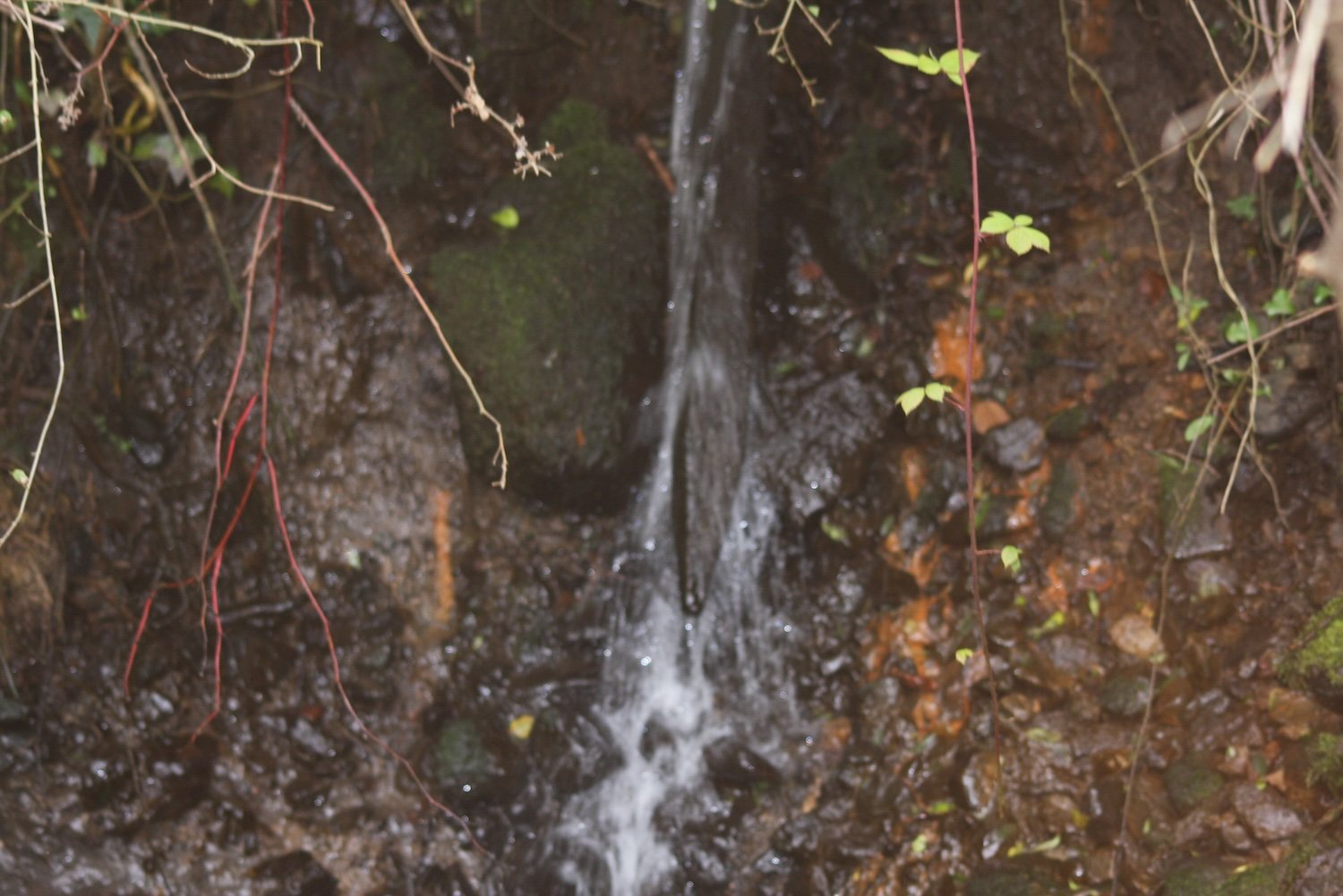 Water questions are indeed existential questions, and we need to take care of it urgently, but it wasn't its usefulness that made Celtic writers think of heaven as 'the gleam of light on water'. I'm still writing love songs to water.
Time on the Tilt
August 24, 2026 Reading time: 5 minutes
 I
I
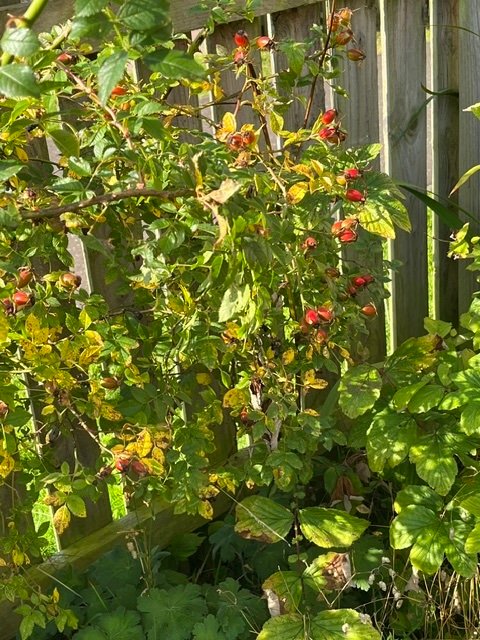
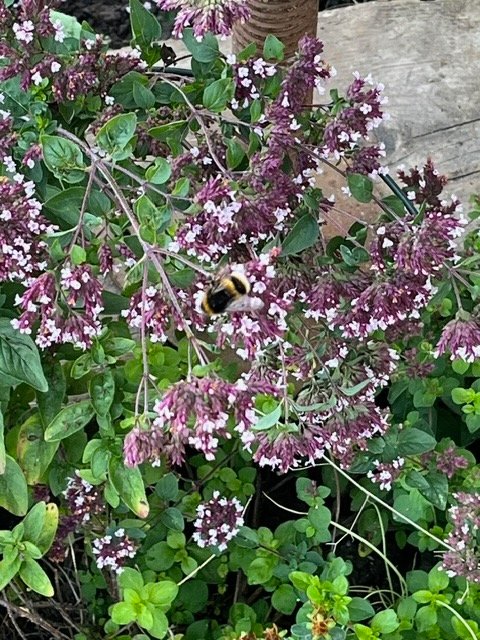
Although it is still August and the sun is hot, the nights are cold and the dew is heavy on the grass. Rowan berries ripening is more of an early warning signal, but when you notice the colour on the reships and hawthorns, it's time to pick up a gear. The grasses, docks and willow herbs are seeding into the hedgerows, there are ripe brambles on the banks and the Himalayan balsam is lining the burn side. The garden smells of ripening damsons after the rain, and there are feathers in the grass where adult birds are moulting and putting on winter plumage. I hear owls again in the darker nights, and the herb patch is rippling with bees and hoverflies. Today the last buddleia flowers are full of painted ladies, and we have had enormous numbers of peacocks, tortoiseshells, red admirals and the usual white butterflies. But also, for the first time, I've seen speckled wood, small copper, and commas here.The hot summer hasn't done any of us much good, and we'll count the cost later, but the butterflies have had a wonderful season.
We have been blest with the wild edges through the year, from the cowslips and cuckoo flower, the blossoming trees and the glorious stands of vetch and clover and thistles. It has made me so happy to see this, but I am aware that Scotland has escaped the worst of the drought, and we are very lucky not to have dealt with scorched gardens, hosepipe bans, lost crops and the rest of it. There are people my age who draw parallels with 1976, as if this was nothing to make a fuss about, but selective memory is a wonderful thing. We had to deal with wartime bath levels of five inches, there were bowsers delivering water to some badly hit areas, and the potato crop was so badly hit that the price of a bag of chips nearly doubled. There was, for a while, a shortage of flour and sugar, and a rumour that salt was going to be next so that panic buying broke out. Then there was the country-wide problem of houses subsiding because of the ground drying out, so that even when your house wasn't affected, the accusation of subsidence was enough to make your house unmortgageable. We were trying to buy our first house just after this, and the Edinburgh housing market didn't know what had hit it. The winter of discontent followed fairly soon after, and it wasn't entirely unconnected.
I can feel that we are in for some of the same sort of instability now. Even Reform feel they have to promise some sort of water conservation response, so it must be serious (not that I would expect them to actually do anything useful!). If forecasters are right and we are in for a massive El Niño event, we really need to have measures in place to keep the water in the ground, and flowing into the reservoirs, not just washing out into the sewers. In my garden, I'm looking at adding humus to the soil in the garden, which will improve drainage, and also add texture and help to retain water, and we're adding rain storage to the gutters where we can. At the moment it's just a couple of buckets! I want to improve my planting to make sure that as much of our soil is covered as possible, too. And we have just installed solar panels. I can't quite believe they will do as well as the salesman assured us, but if it serves as a warning to politicians that we are serious enough about dealing with the climate to put our money where our mouths are, it will help.
On a wider scale, I know there are many people rewetting bogs, re-wiggling water-courses, and bringing back beavers who seem to be doing more to stabilise water levels than anything else. Solar panels are cheaper than they have ever been (but that is a relative concept, I know!) and world wide there is a boom in their production and supply. And yet, there are politicians who are still presenting the environment as a niche issue they can play off against the more urgent needs of income and employment, and energy companies who can say on the one hand that people need help to pay their energy bills, while milking the current political crisis to keep their prices sky high. Time is tilting towards winter, but our time is tilting too, towards the moment when we must put up or shut up, when we realise that looking after each other means looking after the earth that sustains us.
There are so many needs going unmet, but there are also so many people doing something about it. If you follow me on Instagram you will find a lot of them, and their work sustains me in mine. If you are feeding birds, leaving a wild corner in your garden, saving a community centre, supporting someone who is facing war or discrimination, keeping a language or a culture alive, protecting an endangered species, or caring for someone dealing with grief or deprivation, your workman't be over-valued. You are keeping us all from tilting into the abyss.
It's Complicated - on Seeing Nolan's Odyssey
July 28, 2026 Reading time: 3 minutes
Short answer - I loved it, though I could have done with about twenty minutes less in the middle. But this film has sparked a lot of wildly differing reactions, so I thought I'd add my tuppence worth.
First of all, Homer it ain't. No poetry, for one thing, but more crucially, none of what we've grown up thinking of as Classical nobility and dignity. Myself, I didn't find much of that in Homer in the first place, I found it all a bit domestic and personal compared with the post-Renaissance versions of the story. I studied the development of 'the hero' concept through the middle ages for my Masters degree, and frankly there wasn't much nobility in any of them until about the fourteenth century. Our heroes had tantrums, sulked like weans when slighted, and the fair ladies were quite likely to throw chairs at people who annoyed them. But that wasn't the Greek take, which was more like 'life is weird, the gods are unpredictable, what can you do but keep on keeping on.'
In the Middle Ages, too, the Greeks weren't the heroes, not even the good guys. Hector was one of the Nine Worthies, but Achilles wasn't, and as for Odysseus - just no. Cunning, deceitful, treacherous, a byword for who you didn't want to be. Europeans prided themselves on being descended from Trojan survivors, the ones who kept the faith. And Nolan captured some of that.
But what Nolan did, was something different. To be frank I wasn't expecting much more than Jason and the Argonauts style spectacle, and Nolan to me is the Batman films, so I approached this one as yet another superhero battling the monsters. And this is where he scored big time, as far as I was concerned. The shock and spectacle was restrained, the horror was hinted rather than flaunted, the violence was dialled back and the movement of the story wasn't compromised while the animators got to show off. The story-telling was woven together in a more subtle and sophisticated way, so there was none of the jerkiness and disconnection of the usual jumps to other characters to keep the tension up.
Emily Wilson suggests that Odysseus is 'glorified' for realising how bad the Greek behaviour was, but I don't think he is. He is a study of the moral damage of war. He isn't just traumatised, he has been turned into something else, and he is no longer fit for ordinary civil society. Much as Penelope and Telemachus might love him as a person, they have to let him go, and work out how to create a society without the enhanced people, the overblown masculinity, or the pragmatic selfishness that moved into the vacuum the absent ruler left. Nolan doesn't take this argument far, but in the world we are seeing develop all around us, it's a start. I think it might just be the start of of new generation of hero tales for our times.
Also the music. I saw someone complaining about the sirens' song. I think he was expecting the music at that point to represent the allurement and magic we think of, but it didn't. Instead, it did to my brain what the actual siren call might have done - it was weird and disturbing and nothing like anything else. It was stunning.
Funding to Study the Arts
July 9, 2026 Reading time: 3 minutes
In a bizarre document, that simultaneously manages to be both ill-informed, impractical and contradicting Government policy, the Education Secretary Bridget Phillipson has instructed the Office for Students that 'funding should no longer be given to support nursing, computing, history, creative arts, performing arts, archaeology, and geography courses.' https://removepaywalls.com/https://www.timeshighereducation.com/news/nursing-and-computing-courses-hit-teaching-grant-cuts-confirmed#google_vignette.
It is worth noting that computing and performing arts are listed elsewhere in government publications as the most important sectors for growing the British economy, so pulling any form of support at this point is irrational. Also the reason given for this is to protect medicine, which raises the question of how to protect medicine when you penalise nursing.
I have skin in this game. My grand-daughter, who has been at a local stage school for fifteen years, has passed all her exams in musical theatre and ballet, and was dux at her school (winning prizes for both Physics and Mathematics as well as arts), has just been awarded a place at Liverpool Institute of Performing Arts. How do you treat a pupil of such outstanding gifts, achievements and diligence that her degree course is worthless? It turns out that this decision is so vague and impractical as to be almost impossible to implement, so I could have saved myself a couple of sleepless night. But the hostility to the Arts at large in this country is real, and the threat is serious. If we don't have to deal with it now - and many universities do - we are going to have to face it soon.
And then, this morning, I read this:
If we have the leisure and the capacity to read and write poetry, whatever our other individual and collective troubles, we might be seen as among the privileged, the relatively fortunate, compared to many people and other living creatures we know to be suffering, and to have suffered, appalling extremities. https://tearsinthefence.com/2026/07/08/crossing-the-hinge-by-mandy-pannett-tears-in-the-fence/
It is written by John Freeman, and he provides a justification for the luxury of poetry which isn't negligible. But the proposition itself goes a long way to explain why this government thinks that arts are a soft target for spending cuts. Poetry as something for the privileged with "capacity" (what does that mean? education? intelligence? class? taste?) raises the hairs on the back of my neck. Nobody else on the planet thinks that poetry is a luxury for the gently bred, and it's a howling insult to the rest of us to develop our arts policy and industries on that basis. Back to your two-up-two-downs you plebs and you can't go to the opera until you stop keeping your coal in the bathtub. Everywhere else in the world is comfortable with poetry as the expression of emotion, resistance, defiance, lament or insight. Personal, spiritual or political, everyone else turns to poetry as soon as the most critical needs of their society are met, and sometimes where they can't be.
Poetry Publishing in the UK - A Passionate Conversation
June 30, 2026 Reading time: 7 minutes
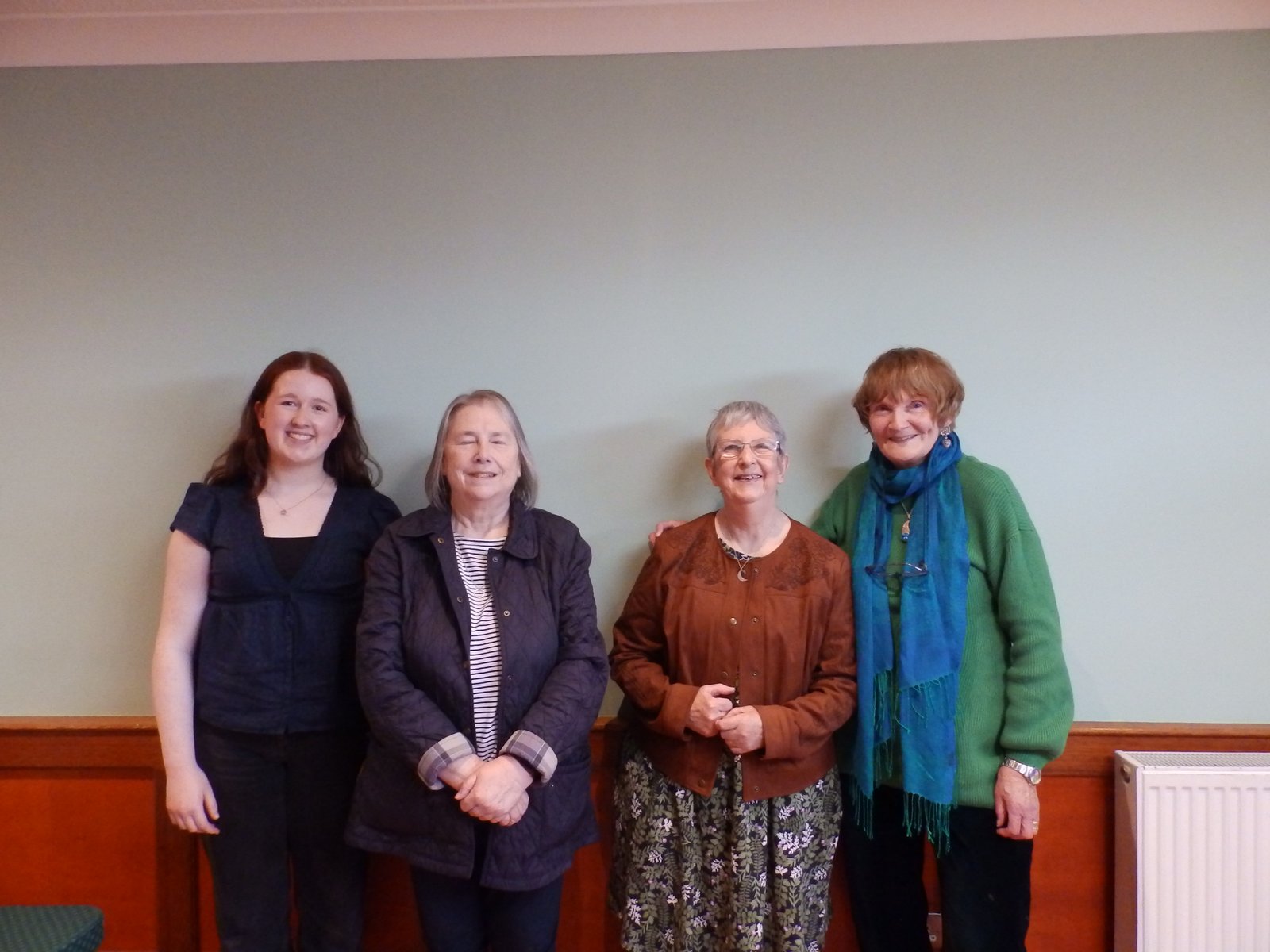 A picture of my publisher, Sheila Wakefield, who hates having her photograph taken, with, from left to right, my grand-daughter, who sang for us, Sheila herself, me, and fellow Red Squirrel poet Anne Connolly, at the launch of Comrades of Dark Night last month.
This post was first published in InterLitQ, during the pandemic. The blog, which published so much good stuff for so long, has since been lost, but my publisher, Red Squirrel Press, is celebrating twenty years in business this year, so it seems timely to post it here. It focuses on the publishing of poetry, why we do it and how we set about it.
I had begun editing a new poet and her work threw up a lot of questions that I hadn’t thought to ask much before now.
Usually poets have an idea in mind, a title, a preferred selection of poems they want to include, or at least a concept of their work as ‘a book’, whether it is a twenty-page pamphlet or a full collection of around sixty pages of poems. But twice now, I have edited poets who don’t do this at all. When asked to submit poems for publishing, they seem to think, ‘oh, that’s nice’, turn in a lot of poems, and wait for the thing to appear as if on a conveyor belt. And I’ve heard of at least one publisher who does that very thing, which as a poet and not an editor, would freak me out.
A lot depends on why you want to be published at all. One of my poets wanted her work in a permanent form to have something to give her children, and I’ve heard several others say something similar. Others are poets who specialise in spoken word, and want a bit of merchandise to sell at gigs, because performing rarely involves being paid directly. In both cases, what is meant by ‘publishing’ is ‘creating a book’, transforming what has been up until now the workings of one’s own mind into a concrete object, as if appearing in a book makes it real. I have to confess that I have a great deal of sympathy with this feeling, especially as the craft of making books as objects turns out to be fascinating - an insight for which I have to thank my publisher Red Squirrel Press, and master typesetter and designer Gerry Cambridge, who does all the Red squirrel Press designs.
Many poets, however, have other aims. A recent poll on Twitter was quite revealing on this, mainly because the question of ‘validation’ didn’t seem to come up as much as I might have expected. So many editors and magazine publishers are plagued with the kind of submitters who become abusive if their work is rejected, that I had assumed a fair degree of narcissism in poets who want to be published. It turns out, at least among poets who took the query seriously, that poets who actively want to publish (as opposed to those rare ones who see their writing as essentially private, like the central character of Paterson,) have various aims in view. Some have something to say on a topic and feel that publishing their poetry is the most effective way to go about it. Others want to submit their work to the judgement of their peers. One said that she had received so much joy from reading the poetry of others that she wanted to give other readers a similar pleasure. But most had variations on the idea that poetry is a conversation, and they wanted to be part of it.
This idea of publishing as a conversation is one I am very taken with. As an editor, I’m not trying to mould my poets into creators of perfect works of art. I want to help people to perfect their own voice, to help them say more clearly what they are wanting to tell, and in a way where it will be heard without misunderstanding or distraction. Publishing poetry isn’t a huckster kind of activity, a megaphone blaring your point of view into a void, or a cacophony of people shouting over everyone else to make money, it’s a reciprocal relationship, listening and reading as much as you write, learning and finding your peer group and your community as much as your place in the pecking order.
Which doesn’t mean that there isn’t marketing and promoting to be done. Most of us are on social media, or try to read at events where we can promote our wares, and some of us are more skilled and active than others. But publishers themselves have a great part to play. A good publisher who turns out beautifully produced books will have a circulation much wider than the kind of print on demand work that a poet can produce alone. I was at a group meeting of small independent publishers lately, and it’s clear that there is a lot of skill and hard work put into giving new poets their chance to make their work known, and for very little return, at least in financial terms. Most small publishers aim simply to cover their costs, and their own living comes from public funding or related paid work which will subsidise their press.
So why do they do it? Some are poets themselves, and recognise that there will be no poetry conversation if they don’t create a way to start it. Some love the book making process, and want to create beautiful objects. Others love poetry and want to be involved in making good work available. Some know that there are good poets who deserve to be published and are dedicated to getting their work known.
In short, the small indie publishers we have in the UK are in it because they are passionate about creating the means to have this poetry conversation we all value, and this is my moment to give them all a vote of thanks. Where would poets be without them?