A Step Back to Leap Forward
June 1, 2026Reading time: 7 minutes

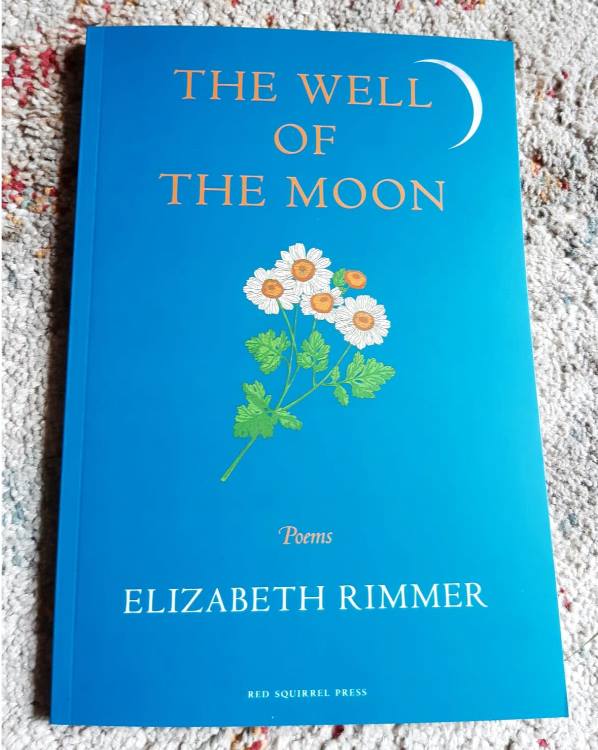
After all the promotion and four readings from Comrades of Dark Night, I'm starting to think of new poems. I've seen a lot of younger poets starting to explore the kind of territory I have been working in, so I'm coming to the conclusion that it is time for me to expand a little, and it's exciting and new. Only perhaps it's not quite that new - I'm sure I've looked at archaeology and magic and layers of accumulated history before, but ..... I got swamped with self-doubt, and wondering what on earth it is that I actually do, and I took occasion to look again at my previous book The Well of the Moon, which had the enormous privilege of an introduction by Alan Riach. I can't tell you how wonderful it is to get such sustained attention from so careful a scholar, and frankly, it is a real encouragement.
There are not many copies of The Well of the Moon left, so before this lovely review disappears into oblivion, I really wanted to share it. I should encourage you to follow the links to Tobar an Dualchais too - they are fascinating!
The Well of the Moon by Elizabeth Rimmer
Alan Riach, Professor of Scottish Literature, Glasgow University
Elizabeth Rimmer’s poems in The Well of the Moon are records of accurate detail assembling particular things through an emotional structuring of language which ensures a sensitised apprehension of the world, from wrens to rainbows, from weeds to ways of water, light and air, their taste and scent, their sound and language. You can breathe the feeling of ‘rocket, lavender, and coming rain’ at nightfall, as the garden ‘is falling awake’. At night, the chickweed’s ‘heart-shaped leaves’ are drawn close together, enfolding ‘to protect the younger growing shoots from frost.’ In sunshine, the iris is ‘like / a thrown golden spear, the talking of rushes.’
The book begins with ‘gallus herbs’ of ‘verge and scrub’, the weeds, blowing seeds over hills, ‘tough, bristly, bitter’ and goes on to itemise the roads that can be mapped in birdsong, the ‘cunning kingfisher’ whose shine tells us he’s ‘swallowed the summer’, the ‘potatoes / big enough for mice to nest in’ and the tomato with its ‘skin loose as on a granny’s hands, / fine as satin, but electric bright / with hoarded sun’.
All these careful noticings, of plants, vegetables, birds, geographies of actual place and tentative emotional uncovering, accumulate gently to a book that teaches unobtrusively a sharp sustained attention. The poet who has touched the salmon’s wisdom with her thumb is always an apprentice, ‘scarred, accidental, listening’ and the apprehension of the world by personal senses becomes in itself a narrative of guardianship, shielding us from the brutalities of exploitation. Without excess, we can savour ‘how a plant spreads / itself joyously in the soil it likes’. We can become ‘haunted by wet places, the lure / of rivers, reedbeds and green lands of ash / and willow’. This is not rhapsody or entrancement but a seemingly effortless persistence of study and annotation.
‘The Well of the Moon’ draws from legends of Finn MacCool as retold by Lady Gregory and transforms the narrative source into an observational affirmation. An archaeological dig at the ruined Abbey of Cambuskenneth yields more than material things: this is a discovery of immaterial realities, hitherto buried in obscurity, the yirdit things. These poems blend and balance, but never dissolve, specific things, people, sources, constructions of nature and culture, into a composite ethos where words are working hard but undemandingly, unassertively, almost everywhere assured.
‘Spelling the Rainbow’ gauges the meanings of colours, like ‘Glaukopis (grey)’ as it ‘shifts between green / and blue and hazel’, the colour of ‘the eyes of Athena, the exact / representation of wisdom’; ‘Gorm (blue-black)’ is the colour of ‘bruises and the tart / skins of brambles and damson’ or ‘the sea when clouds threaten’. The sequence is based on Alice Oswald’s understanding that colour words always suggest an ‘emotional resonance’.
Without the flamboyance, personalities or didactic moral intent and irony but with something of the same magic intact, Rimmer’s poems have some affinity with Maurice Ravel’s wonderful little opera masterpiece, L'enfant et les sortilèges. The evocation of living things in the natural world has another kind of affinity with the Gaelic representations, or rather, translations, of birdsong to be found in the archives of Tobar an Dualchais, the Kist o Riches, at the School of Scottish Studies at Edinburgh University, a wonderful labyrinth of over 50,000 recordings from the 1930s till now, still so badly under-explored. Try this for thrush, lark, crow, seagull and dove:
http://www.tobarandualchais.co.uk/en/fullrecord/25889?backURL=/en/search%3Fpage%3D1%23track_25889
But words on the page do different things than music or sound recordings. In the beautiful production of Red Squirrel Press, Rimmer’s poems are permitted the space and letters-on-paper presence required to be read and held silently in the mind and mortal memory. They stay there delivering replenishment like the poet’s grandmother’s ghosts, women unseen, spooky, present in air, counterparts and counterpoints to Gerda Stevenson’s Quines. Stevenson’s poems give voices to historical women whose biographies cry out to be brought forward. For the most part, the lives of the women conjured up in The Well of the Moon remain unknown, unverified by data, but they are nonetheless present, informing, guides and scouts for all of us. We look for such presence as theirs in Elizabeth Rimmer’s poems ‘like a child obsessively checking / if the ghost is still under the bed / and it always is.’
Posted by Admin
Tags: |
<< Next Page: Poetry Publishing in the UK - A Passionate Conversation Previous Page: The Landscape of Well-Being >>