Poetry Publishing in the UK - A Passionate Conversation
June 30, 2026Reading time: 7 minutes
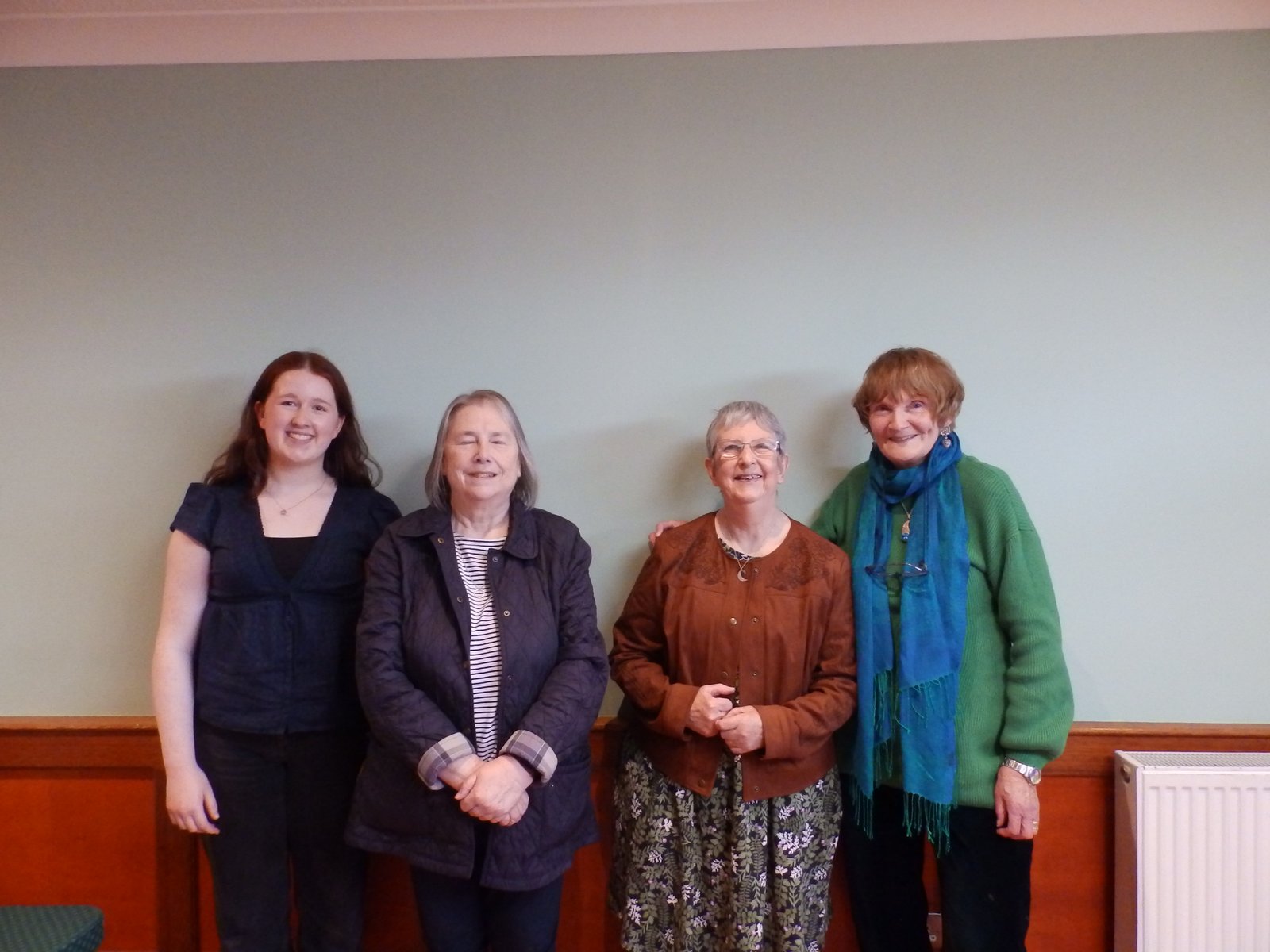 A picture of my publisher, Sheila Wakefield, who hates having her photograph taken, with, from left to right, my grand-daughter, who sang for us, Sheila herself, me, and fellow Red Squirrel poet Anne Connolly, at the launch of Comrades of Dark Night last month.
This post was first published in InterLitQ, during the pandemic. The blog, which published so much good stuff for so long, has since been lost, but my publisher, Red Squirrel Press, is celebrating twenty years in business this year, so it seems timely to post it here. It focuses on the publishing of poetry, why we do it and how we set about it.
I had begun editing a new poet and her work threw up a lot of questions that I hadn’t thought to ask much before now.
Usually poets have an idea in mind, a title, a preferred selection of poems they want to include, or at least a concept of their work as ‘a book’, whether it is a twenty-page pamphlet or a full collection of around sixty pages of poems. But twice now, I have edited poets who don’t do this at all. When asked to submit poems for publishing, they seem to think, ‘oh, that’s nice’, turn in a lot of poems, and wait for the thing to appear as if on a conveyor belt. And I’ve heard of at least one publisher who does that very thing, which as a poet and not an editor, would freak me out.
A lot depends on why you want to be published at all. One of my poets wanted her work in a permanent form to have something to give her children, and I’ve heard several others say something similar. Others are poets who specialise in spoken word, and want a bit of merchandise to sell at gigs, because performing rarely involves being paid directly. In both cases, what is meant by ‘publishing’ is ‘creating a book’, transforming what has been up until now the workings of one’s own mind into a concrete object, as if appearing in a book makes it real. I have to confess that I have a great deal of sympathy with this feeling, especially as the craft of making books as objects turns out to be fascinating - an insight for which I have to thank my publisher Red Squirrel Press, and master typesetter and designer Gerry Cambridge, who does all the Red squirrel Press designs.
Many poets, however, have other aims. A recent poll on Twitter was quite revealing on this, mainly because the question of ‘validation’ didn’t seem to come up as much as I might have expected. So many editors and magazine publishers are plagued with the kind of submitters who become abusive if their work is rejected, that I had assumed a fair degree of narcissism in poets who want to be published. It turns out, at least among poets who took the query seriously, that poets who actively want to publish (as opposed to those rare ones who see their writing as essentially private, like the central character of Paterson,) have various aims in view. Some have something to say on a topic and feel that publishing their poetry is the most effective way to go about it. Others want to submit their work to the judgement of their peers. One said that she had received so much joy from reading the poetry of others that she wanted to give other readers a similar pleasure. But most had variations on the idea that poetry is a conversation, and they wanted to be part of it.
This idea of publishing as a conversation is one I am very taken with. As an editor, I’m not trying to mould my poets into creators of perfect works of art. I want to help people to perfect their own voice, to help them say more clearly what they are wanting to tell, and in a way where it will be heard without misunderstanding or distraction. Publishing poetry isn’t a huckster kind of activity, a megaphone blaring your point of view into a void, or a cacophony of people shouting over everyone else to make money, it’s a reciprocal relationship, listening and reading as much as you write, learning and finding your peer group and your community as much as your place in the pecking order.
Which doesn’t mean that there isn’t marketing and promoting to be done. Most of us are on social media, or try to read at events where we can promote our wares, and some of us are more skilled and active than others. But publishers themselves have a great part to play. A good publisher who turns out beautifully produced books will have a circulation much wider than the kind of print on demand work that a poet can produce alone. I was at a group meeting of small independent publishers lately, and it’s clear that there is a lot of skill and hard work put into giving new poets their chance to make their work known, and for very little return, at least in financial terms. Most small publishers aim simply to cover their costs, and their own living comes from public funding or related paid work which will subsidise their press.
So why do they do it? Some are poets themselves, and recognise that there will be no poetry conversation if they don’t create a way to start it. Some love the book making process, and want to create beautiful objects. Others love poetry and want to be involved in making good work available. Some know that there are good poets who deserve to be published and are dedicated to getting their work known.
In short, the small indie publishers we have in the UK are in it because they are passionate about creating the means to have this poetry conversation we all value, and this is my moment to give them all a vote of thanks. Where would poets be without them?
Posted by Admin
Tags: |
<< Next Page: Funding to Study the Arts Previous Page: A Step Back to Leap Forward >>